Are you fine connecting separate tools for auth, payments, billing, taxes, and analytics? Or do you prefer one system handling most of it? Not just because setup takes time, but because every extra service means another dashboard, integration, and possible failure. Asking this cause I think builders should spend more time shipping the product, as long as the backend stays flexible and reliable. But this brings us to another question, when does convenience become lock-in?




Scarlett.
Excited to hunt tiun today.
@tiun is the all-in-one backend for AI and SaaS builders who want to launch and monetize their products without stitching together multiple tools for authentication, payments, billing, customer data, and analytics.
Instead of combining Stripe, Clerk, a separate database, invoicing software, and multiple analytics tools, tiun brings the entire customer and revenue infrastructure into one platform.
What stands out here:
• Auth & User Management: Drop-in authentication without building from scratch.
• Flexible Billing: Manage subscriptions, one-time payments, or usage-based billing.
• Handles invoices, global taxes, and Merchant of Record (MoR) operations.
• Single Dashboard: Track customers, transactions, and product activity in one place.
chat-recall
Interesting solution! Congrats for the launch!
Can you give some details on the auth and the db limits/cost and also scalability? Is there a limit after which there are different costs compared to a simple db and x nr of users?
Also on the payment - how can you manage to offer such good rates compared to the alternatives? Can you give some details on how the payments are sent and if you use a PSP in the backend?
I see hosted in Europe - any details you can provide on this?
Again - awesome and ambitious product! congrats for the launch.
tiun.
@darkkraft Thanks for your support and kind words! And great questions :)
On auth + DB: right now we don't charge separately for either, and there's no user count or database size limit where a different pricing tier kicks in. We subsidize that infrastructure through our payment fee. That may evolve as we scale, but for now we want to keep the model as simple as possible. Scalability-wise it's the same stack whether you have 10 users or 100k, no migration as you grow.
On payments: yes, we do work with PSPs in the backend. I shared a bit more detail on how we're able to offer these rates in another comment here, but the short version is that we've built strong payment partnerships here in Switzerland. We're also moving off Stripe as a processor over the coming months.
On hosting: we're not 100% Europe yet, but almost! Just want to be transparent about that. You can see the full list of subprocessors on our website. Getting to a fully European setup is clearly where we we are heading.
Outcome
Really interesting - seems like a huge undertaking from a product perspective. I'd assume folks will be a little more hesitant to pivot on the payment side of things if they're already in the Stripe ecosystem (unless fees here are significantly lower than that like 2.9%+ or whatever it is they're charging these days.
So beyond having it all baked into one system - is the pricing better or comparable than stripe for transactions?
Also - an idea that would make me think about pivoting - Clerk now only allows X amount of (I think 3 or 5) "Impersonations" per month on their more Jr plans.
For us as a small scale startup - that feature is super important for me as a no-code person as I can go into their account - and see if its something they're doing wrong OR if its a system issue / bug unique to their account / create things for them etc etc.
Before they allowed unlimited and its a great rev level for them but for me and what I use clerk for - its a huge headache as I don't want to scale up any of the other feature sets.
Not sure if that would be a lever for anyone else to evaluate pivoting but for me that would be a great nice to have - unlimited impersonations.
Outcome
Also - congrats on the launch haha
tiun.
@dzaitzow Thanks Daniel! And yes — definitely a big undertaking 😃
On pricing: we’re not interested in entering a pricing war with Stripe. If you compare tiun’s payment processing fees with Stripe’s, we’re roughly on par.
We try to win by creating value outside of the Stripe ecosystem. The comparison gets more interesting once you add everything else you normally need around payments like tax compliance, billing, authentication, customer database and analytics.
We bundle that into one system and keep the overall economics very competitive. We also have more flexibility on fees and volume discounts as businesses on our platform grow.
On the impersonation point: not sure if I understood your use case 100% correctly, but here’s my take:
As an admin, you can go into the tiun dashboard, inspect what happened with a customer and make changes where needed.
Today our roles are still pretty simple like Admin and View Only. We want to build this out further over time, but haven't gotten to it yet ...tbh
One thing that might be relevant though: the number of people you can invite to your tiun dashboard is unlimited. We don’t do seat-based pricing, so you can give your whole team access without paying more per user.
Outcome
@sandro_zweig1 ah got it! Yea for us - the clerk tool lets you impersonate a user - so for us - I can walk through someones issues AS them and make changes in their account / create content / record videos for them - in their account VS just a demo environment.
Keep me posted if that feature makes it to your roadmap!
tiun.
@dzaitzow Ah got it — yes, that makes total sense now 😃 That’s true user impersonation, not just admin access.
We don’t support that today, but I can definitely see why it’s super useful for small teams doing support themselves. Added to the list — will keep you posted if it makes it onto the roadmap 🙏
tiun.
Hi Product Hunt! 👋 I’m Nikolaos, one of the founders of tiun.
AI tools now let one builder ship what once required an entire product team. The obvious gain is speed, but turning that product into a business still requires several systems that were never designed to work together.
We saw this across 150+ founder conversations: You build the core product in days, then spend weeks connecting auth, payments, billing, and analytics.
The Problem with "Best-in-Class" Tool Stacks:
❌ Sync Chaos: Every tool brings its own customer ID, billing state, event model, and retry logic. Your code ends up stuck keeping them in sync.
❌ Broken Logic: A subscription renews in your payment provider, but a failed webhook leaves your database unchanged—so a paying customer suddenly loses access.
tiun removes that coordination layer.
Authentication, payments, billing, customer data, and analytics run in one system, connected from the very first transaction:
⚡ All-in-One Infrastructure: Subscriptions, one-time payments, usage-based billing & Merchant of Record (MoR) services out of the box.
🔄 One Customer Context: Account and commercial state stay connected across the product, without another sync layer to maintain.
🚀 Go Live in Minutes: Connect tiun and delete weeks of redundant backend work from your roadmap.
tiun isn't another isolated auth tool or payment dashboard. It is one unified system for shipping and monetizing your product.
We'd love your feedback! Give tiun a spin and tell us: Which part of turning a product into revenue still feels harder than it should? 👇
@nikolaos_chr having merchant of record built directly into the authenticate and billing layers is a huge for solo builders and also the single customer context sound are really useful, especially when dealing with the subscriptions.
which part of the setup the usually takes the most of the time for founders today???
tiun.
@amrita_prajapati2 give it a shot - then come back and tell us what to improve! appreciate the support
PageAI
Super interesting idea to combine MoR with auth and analytics.
I think this is going to be huge.
Do you have any plans to go into storage/db so tiun would be the only platform you need to build an entire startup? 👀
tiun.
@dan_mindru Thanks Dan, appreciate it!
Right now we're deliberately focused on the commercial layer: auth, customer database, payments, MoR, tax and analytics as one system. That's where the fragmentation actually hurts.
For your app's own data, Supabase and Neon are great products and we'd rather plug into them at this point. That said, we already store a lot of the data a startup cares about :) user data, payment data, product data. So the line between "our database" and "your app's database" gets blurry fast. A broader data layer is never off the table, we just want to nail our current offering before we branch out.
If you have a specific use case in mind, I'd love to hear it. That's exactly the kind of signal that shapes what we build next.
Jinna.ai
Sounds like “build in minutes not hours” 😃 Payment-wise, how is it different from integrating with MoRs, and what’s your fee?
tiun.
@nikitaeverywhere Thanks Nikita! Payment-wise, we’re a MoR, so we handle the usual stuff like VAT/sales tax, invoicing and disputes.
The main difference is everything around the payment. With most MoRs you still need separate tools for auth, your customer database and analytics. tiun combines all of that with payments in one backend and one data model.
So instead of integrating 4–5 different tools (and paying a subscription for all of them:) and connecting the data yourself, you can basically start with tiun and build from there.
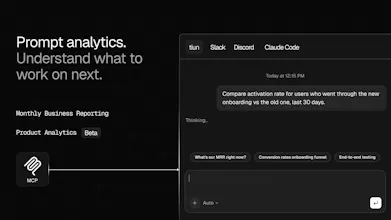
You can integrate manually or install our skills and connect your agent to our MCP, so getting started is pretty quick.
On pricing you can go to our website tiun.io/pricing and see how we compare to other players here: tiun.io/why-tiun
FuseBase
Congrats, team! Relevant product! One recurring problem for indie hackers is that Stripe is unavailable or limited in their country. Can a founder use tiun to sell globally without first building a company in a Stripe-supported market?
tiun.
@kate_ramakaieva Thanks Kate, appreciate it! And yes — The countries we support aren’t dependent on Stripe’s availability.
Today, businesses from 39 countries can onboard with us and sell to customers across 64 countries.
We’re adding new countries pretty much every month, and we’re quite reactive to requests from founders — so if your country isn’t supported yet, definitely reach out.
You can see the full and always up-to-date list of supported countries here: https://legal.tiun.io/business-location