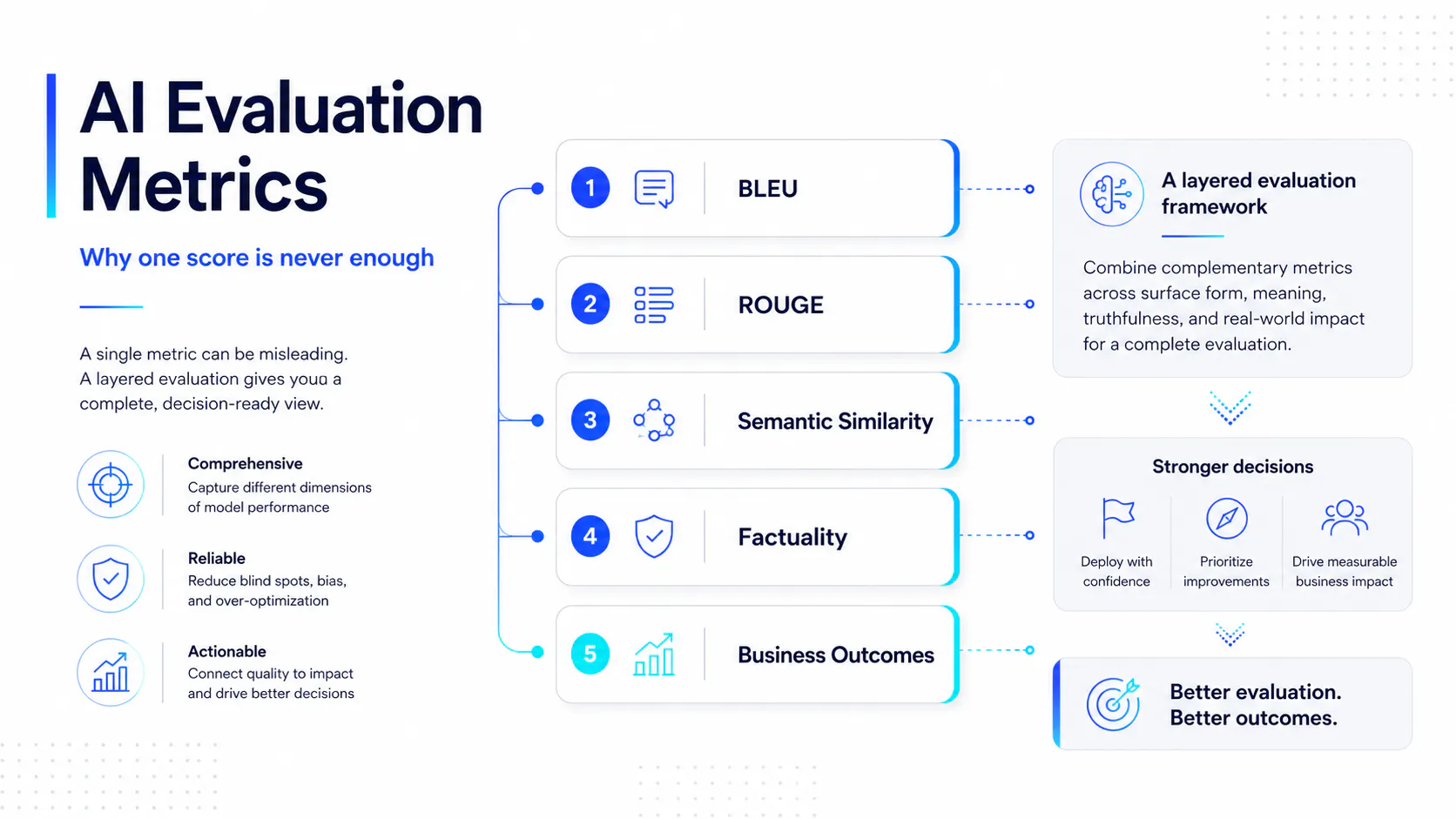
Some AI teams argue that metrics such as BLEU and ROUGE belong to an earlier era of natural language processing. Modern language models can paraphrase, reason across documents, and generate answers in many valid forms. A metric based on matching words may seem too limited for such systems.
That criticism is valid, but removing lexical metrics creates another problem.
Enterprises still need fast, stable, and low-cost ways to detect changes in AI output. BLEU and ROUGE can support that need. The mistake is not using these metrics. The mistake is treating one score as proof that an AI system works.
AI memory does not replace human expertise. It only becomes useful when expert knowledge gives it context.
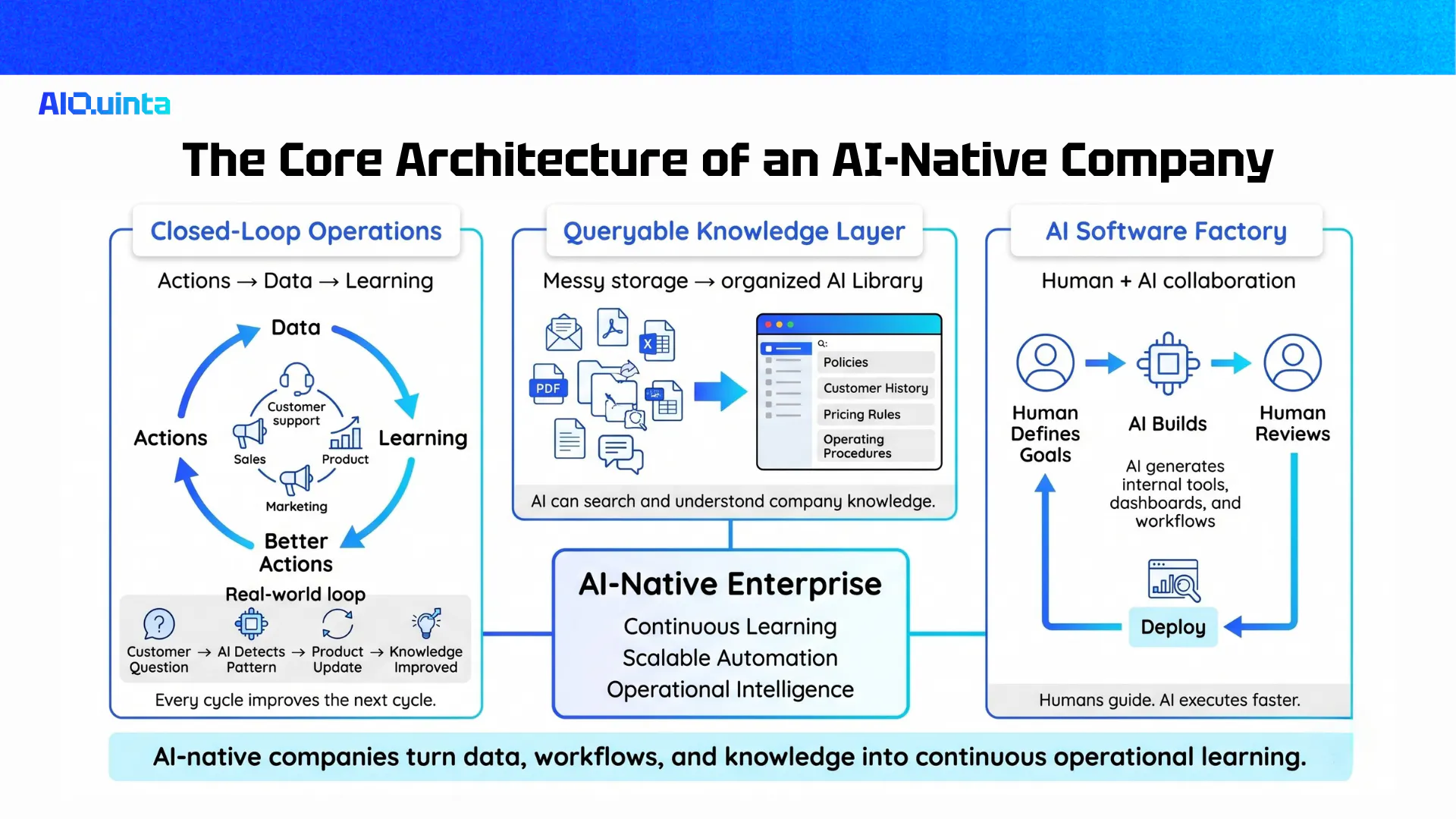
Most companies already have too much information: documents, SOPs, meeting notes, chat history, CRM records, reports, and dashboards. The issue is not storage. The issue is that people cannot find the right knowledge at the right time, or they do not know which source to trust.
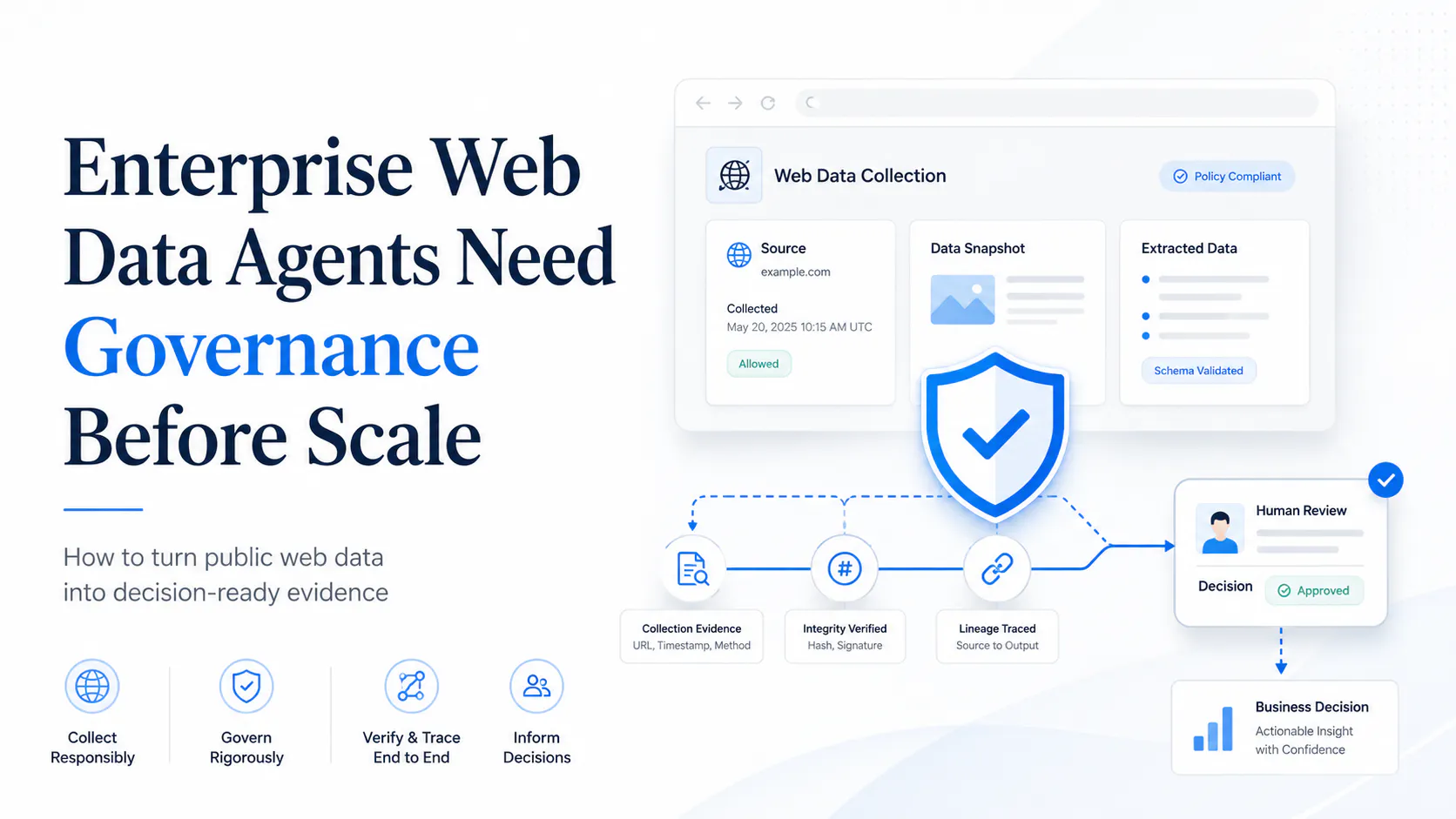
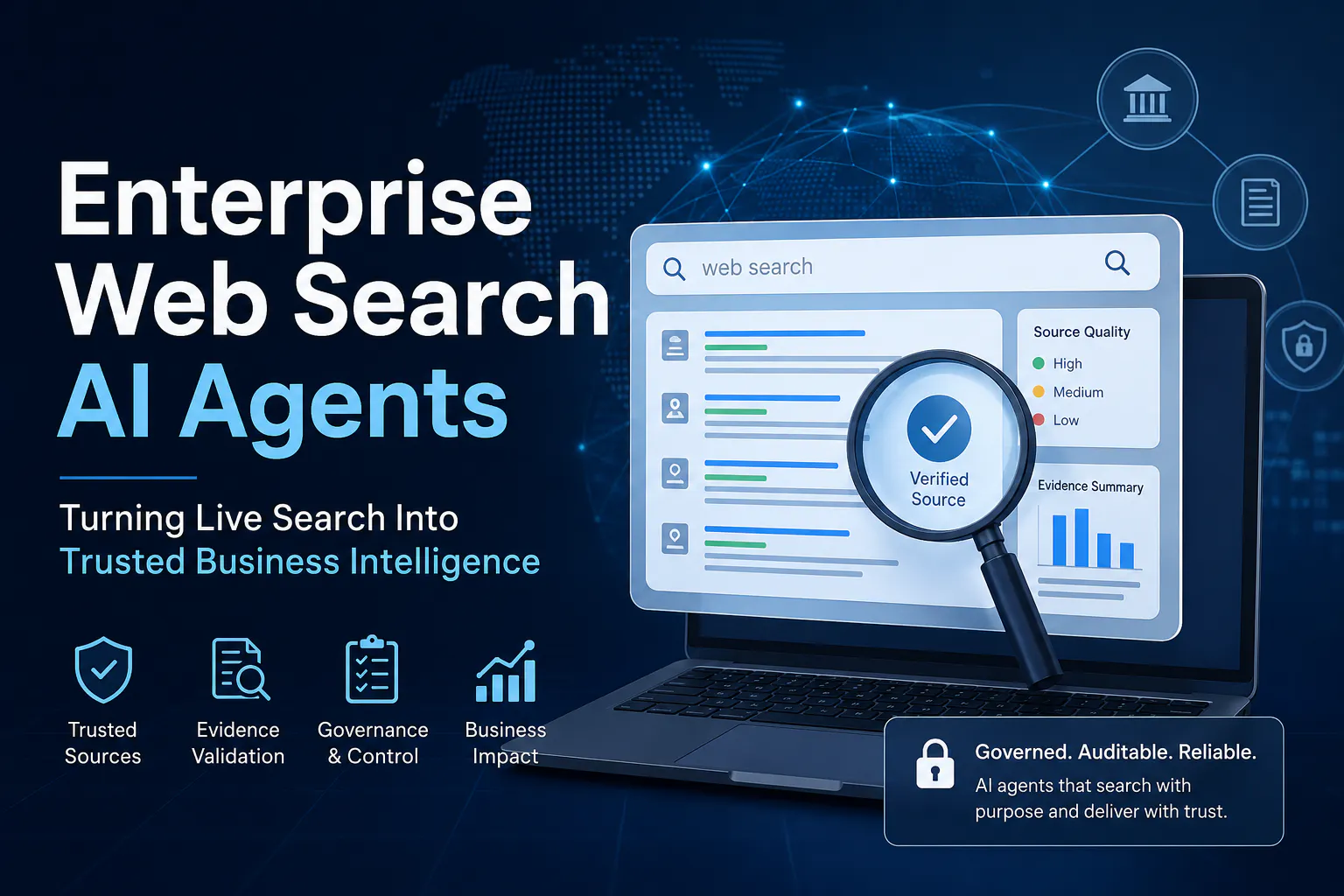
Web search AI agents can look useful because they retrieve live information. But that strength also creates risk.
The open web contains outdated pages, weak sources, biased vendor claims, duplicate content, and SEO articles that rank well without adding real evidence. If an AI agent uses these sources without control, it may produce answers that sound precise but fail under review.
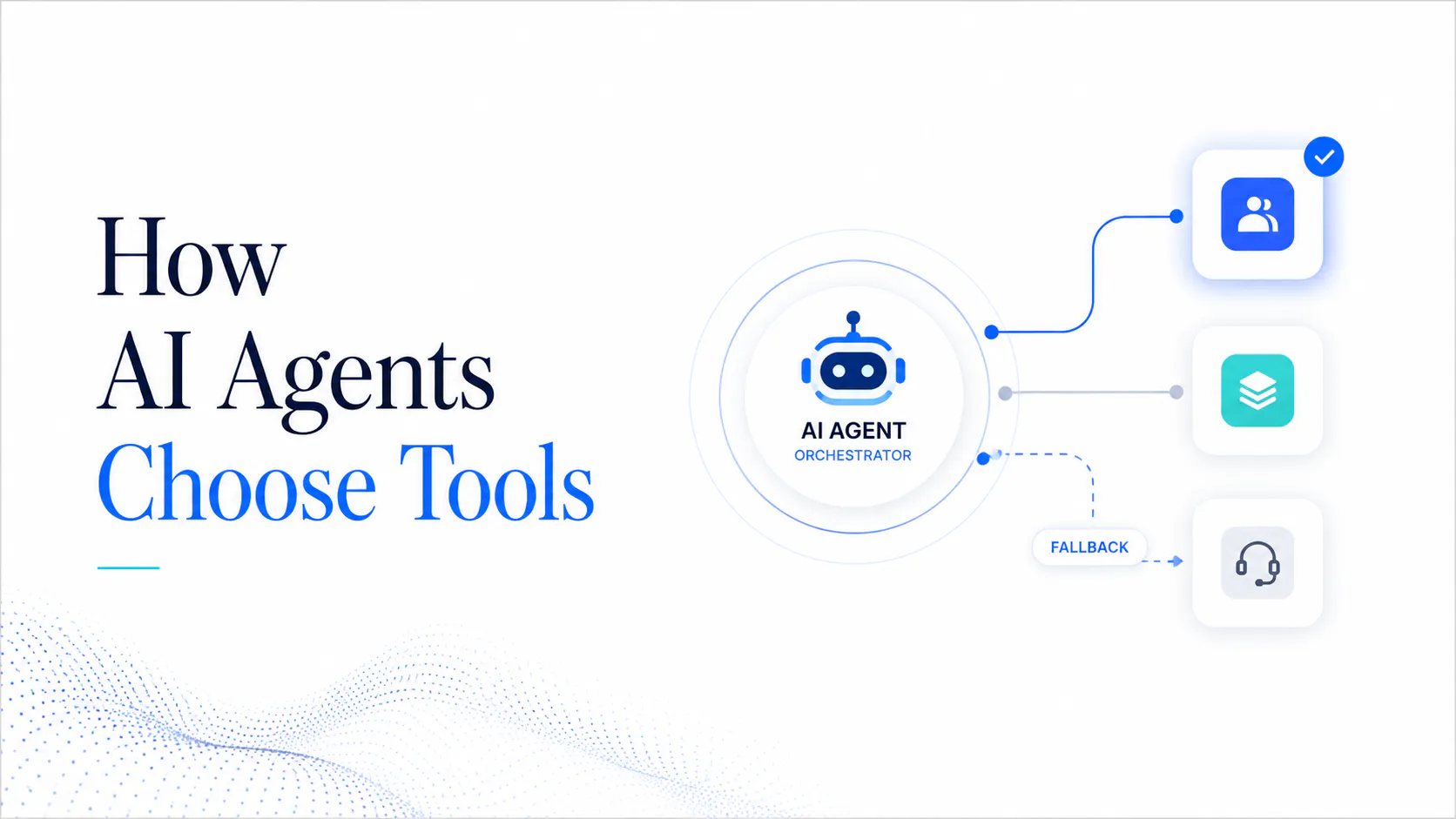
AI agents do not become useful just because they have access to many tools. In enterprise workflows, the real value comes from choosing the right tool at the right time.
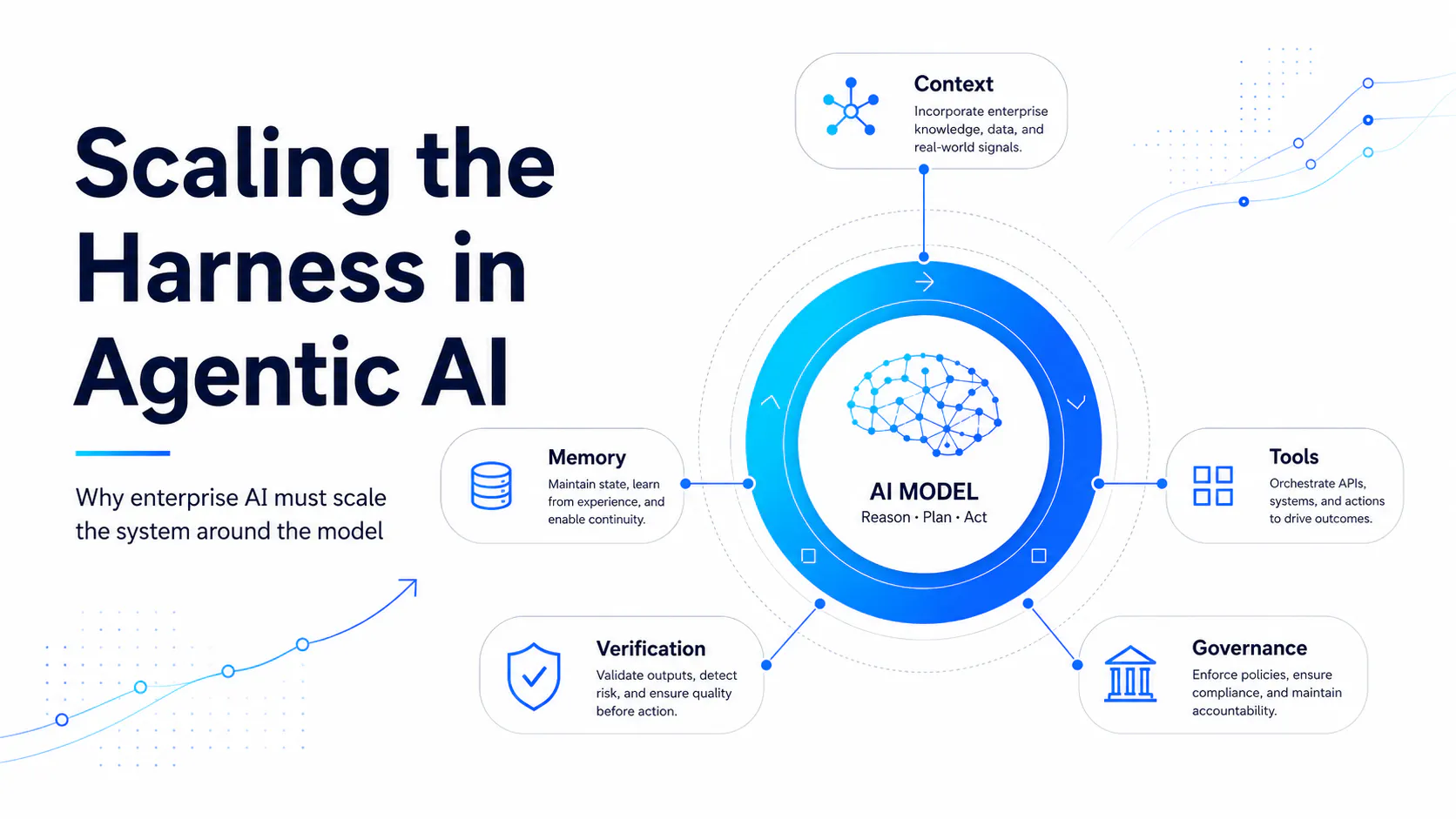
AI agents do not fail only because the model is weak. In many enterprise projects, the larger failure point sits outside the model: unclear tools, vague inputs, loose outputs, and poor error handling.
A prompt can tell an agent what to do. A tool schema defines what the agent is allowed to do, what data it must provide, what result it should expect, and what happens when execution fails.
That difference matters. Once an AI agent connects to CRM, ERP, finance systems, workflow tools, databases, or internal knowledge bases, it stops being a chatbot. It becomes an execution layer. At that point, prompt quality alone is not enough. The business needs a clear operating contract between the model, the application, and the system being called.
Most enterprise AI pilots fail at the same point: they can generate a good answer, but they cannot take reliable action.
A chatbot can summarize a document, draft an email, or explain a process. An AI agent needs to do more. It must check live data, call a business system, extract values from a file, update a workflow, create a report, or trigger the next step in an operation.
A secure agentic workflow requires scoped skills, explicit permission manifests, risk-tier controls, and separated execution environments to prevent over-permissioned agents from moving across systems or user boundaries.