
 •
•6mo ago
Just shipped v1.0.2 of Prompt Helix. Would LOVE feedback from this community
I built Prompt Helix.
A Chrome extension that lets you ask AI questions about any webpage without copy-pasting context in. BYOK, four AI providers, built-in intents.
 •
•6mo ago
Manage your finance and subscription with voice control .
 •
•6mo ago
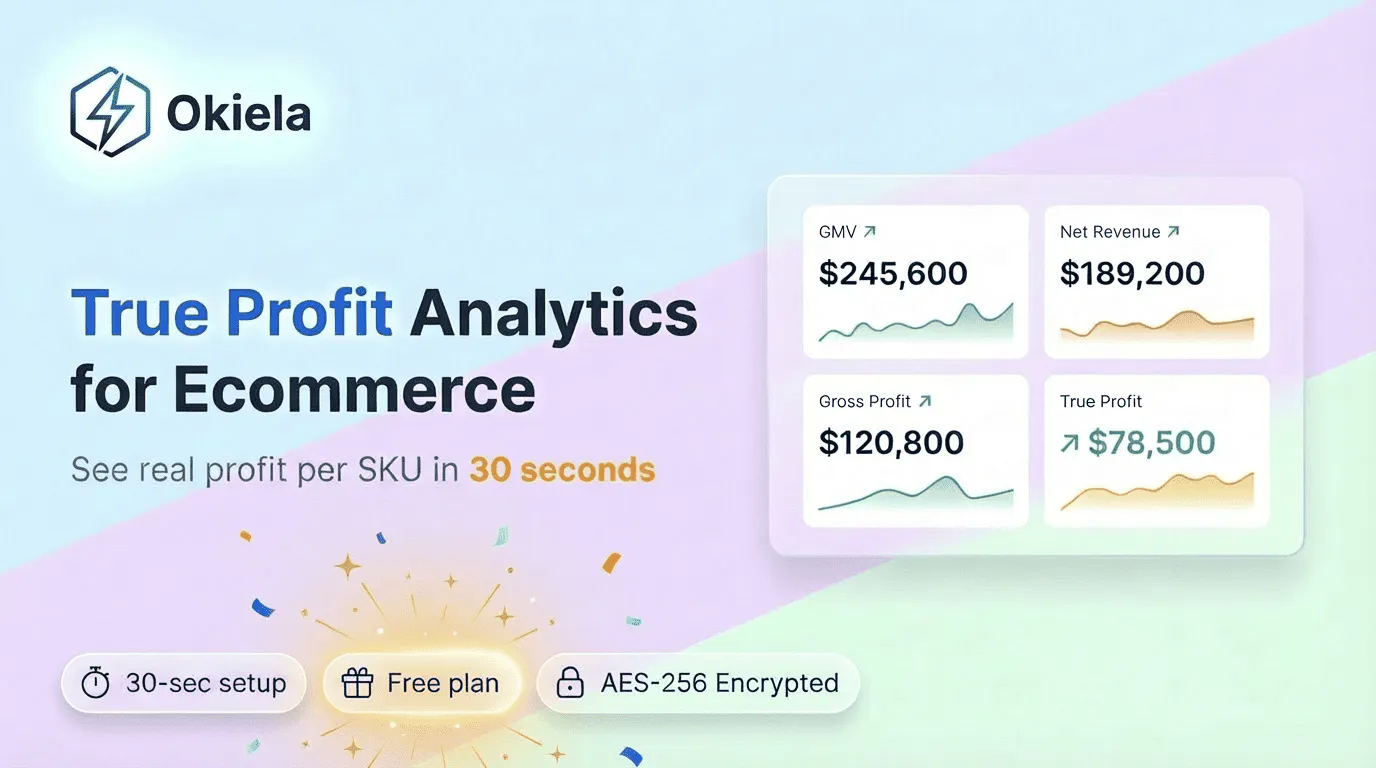
From Shopify CSV to True Profit in 30 Seconds (No Spreadsheets)
I ve been posting less lately.
Not because I lost momentum, but because I wanted to give more of my time and attention to Okiela.
Over the past few weeks, I ve been going back into the product, re-checking small details, re-running tests, and repeating the experience from the perspective of a real user. I kept asking myself a simple question: if I were a Shopify merchant seeing this for the first time, what would still feel unclear, frustrating, or not valuable enough yet?
I want Okiela to be more polished, more useful, and more grounded in real business decisions before I submit and list it on the Shopify App Store. My goal is to bring it closer to Shopify store owners and agency teams who are trying to understand what their business is actually making, not just what the dashboard says.
Okiela is still early. It s still young. And I m building it as a solo non-code founder from Vietnam with an FP&A / finance background, so I know it won t be perfect on day one. But I care deeply about making it genuinely useful for people who are not finance experts and still need a fast, simple way to see true profit by SKU, order, and channel.
I ve also recorded a short screen demo of the flow: uploading Shopify order data and getting to real true profit much faster, assuming the relevant cost inputs are there. (Youtube link: https://youtu.be/UZr91L8TPq4)
If you work with Shopify brands, agencies, or e-commerce teams, I d truly appreciate your honest feedback. Sharp feedback is welcome. That s how Okiela gets better.
And if you know someone dealing with this exact pain, I d be grateful if you shared Okiela with them.
Thanks for being here <3
------------
#shopify #ecommerce #profitability #saas #fpandA #financialanalytics #solofounder #bootstrapping #shopifyapps #dataoveropinions
 •
•3mo ago
Launching Zynos AI - Faceless Youtube Shorts & UGC Generator
Create Premium Short Videos With AI.
No Editing Team Required.
Zynos AI generates publishing-ready TikToks, Reels, and YouTube Shorts with talking avatars, faceless b-roll, and viral hooks. Professional output. Zero generic AI slop.
 •
•6mo ago
Product Hunt Description for 8x8 Project
 •
•3mo ago
Pxyedge: Rotating Residential Proxies
Hey Product Hunt community!
If you've worked with proxies at scale, you know the pain: frequent IP bans killing your scraping jobs, unstable connection speeds derailing automation workflows, opaque pricing that balloons unexpectedly, and integration docs that make even simple setups take hours. We've been there too.
That's why we built Pxyedge a rotating residential proxy platform designed for developers and growth teams who need reliability without the headaches.
Here's what we're bringing to the table:
 •
•3mo ago
How are people stopping AI agents from taking unsafe actions?
I m trying to understand how builders are handling this.
AI agents are moving from generate text to take actions :
- run shell commands
- call APIs
- modify GitHub repos
- access databases
- trigger deploys
- send webhooks/emails
- use MCP tools
Prompt injection feels much more serious once the agent can actually execute something.
My current thinking is that teams need a checkpoint before execution:
agent wants to call a tool
policy checks the tool + args
action is allowed, blocked, or logged
agent continues or stops
I m building a small tool around this called Relay, but I m mostly looking for feedback from people building agents.
What would you block by default?
My current list:
- destructive shell commands
- repo deletion / force push
- database drop / truncate
- production deploys
- secret access
- outbound calls to unknown domains
- emails/webhooks with sensitive data
Curious how others are solving this today:
- allowlists?
- denylists?
- human approval?
- sandboxing?
- audit logs?
- MCP gateway?
- custom wrappers?
Relay is here if useful:
https://relay-security-lemon.ver...
 •
•6mo ago
Turn your website into social posts (without overthinking it)
Hey
I ve been working on a project called FeedReady.
The idea came from something I kept noticing:
A lot of businesses actually have good content it s just buried on their website.
And when it comes to social media, they get stuck.
So I built something simple.
 •
•3mo ago
I'm building a tool that connects books, papers and films into learning paths – would you use it?
Been building this for a few months, mostly because I couldn't find anything that actually solved my own problem.
The problem: I want to deeply understand a topic capitalism, samurai culture, existentialism, whatever and I don't know where to start. I google "best books on X", get 15 listicles, pick one randomly, finish it, and still feel like I'm missing context. I don't know what I should have read before it. I don't know what to read next. I don't know which documentary would make it click visually.
So I started building Cognivium.
The idea is simple: you search a book or topic, and instead of just getting "people also read", you get:
 •
•3mo ago
Built for Developers: One API Platform for SEO, AI & Web Scraping
After trying dozens of APIs for SEO, SERP data, scraping, AI, and social media, I got tired of juggling different providers, authentication methods, and pricing models.
That's why I've been using YepAPI.
It brings 130+ endpoints together under a single API key, covering things like:
Google SERP & keyword data
Backlink and domain analysis
Web scraping with JavaScript rendering
AI models through one OpenAI-compatible endpoint
YouTube, TikTok, and Instagram data