Reviewers consistently praise ROMA for breaking complex, multi-step work into manageable pieces and making the whole process visible through clear stage-by-stage tracing. Users say this transparency makes debugging, prompt tuning, and trust much easier than with black-box agent tools, while the modular, open-source setup adds flexibility and confidence. Performance and reliability are often described as strong, especially on research and data-analysis tasks, though a few users note a steeper learning curve, slower execution on heavier workloads, and a need for more benchmark examples.


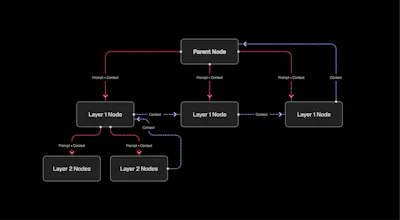


Sentient’s open-source framework, ROMA, is a groundbreaking step in the journey toward AGI. With its flexible architecture that integrates with any model, task-sharing capabilities, and interaction with specialized agents, it’s more than just a tool—it’s an evolving intelligence ecosystem. Through transparency, community contribution, and exceptional performance, Sentient is turning the vision of open-source AGI into reality.
OMA sounds very promising. The recursive and hierarchical structure seems like a powerful approach for handling complexity, especially in multi-agent systems. I like that it emphasizes both high performance and transparency it could make adoption much easier for developers and researchers working on advanced AI tasks.
@zaczuo zaczuo Roma is the future of AI game ! It's a brand new way for the AI
Sentient is creating a great revolution together with ROMA. It breaks down complex questions into smaller parts and assigns each one to expert representatives.
You can imagine it like an orchestra conductor.
Bullish
ROMA will soon be the backbone of Open Source AGI
ROMA will be the backbone of open source AGI
Great launch
Looking to test more and give a detailed review