Reviewers consistently praise ROMA for breaking complex, multi-step work into manageable pieces and making the whole process visible through clear stage-by-stage tracing. Users say this transparency makes debugging, prompt tuning, and trust much easier than with black-box agent tools, while the modular, open-source setup adds flexibility and confidence. Performance and reliability are often described as strong, especially on research and data-analysis tasks, though a few users note a steeper learning curve, slower execution on heavier workloads, and a need for more benchmark examples.




ROMA by Sentient is a tool that connects and organizes community knowledge—like a “shared brain” where everyone can easily find, share, and contribute ideas.
Hello, I'm a loyal user of Sentient OpenAGI. I've tried many large AI language model applications, such as Google GenMini, GPT, DeepSeek, and ChatGLM. They all have their own unique features. When Sentient released the open source framework ROMA, I was deeply impressed. This framework is highly open, and its architecture supports access to any local or API model, and allows you to connect to custom data sources to build specialized intelligent agents. I'm very much looking forward to the future development of Sentient OpenAGI. My Twitter handle is: 0xMulight, and I post about Sentient every day. Keep building
ROMA demonstrates that open-source agents can be competitive with closed systems if the proper structure can be arranged.
I’ve already written about ROMA on Twitter. I only have positive thoughts about it. I believe in Sentient and its bright future.
ROMA will be the backbone of open source AGI
ROMA will be a game changer in the AI world 💪
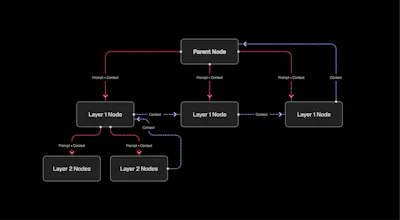
ROMA, on the other hand, gives me a sense of team spirit… Atomizer, Planner, Executor, Aggregator. Each one takes on a task, and together they produce a strong answer in the end.