

Forums


 •
•14d ago
Frame Localizer helps you test multilingual UI before translation breaks the design.
Hello PH community!
I built Frame Localizer because translation usually gets treated like a text problem, when it s really a UI problem.
It s a Figma plugin for testing multilingual UI earlier in the design workflow. The focus is simple: help teams see whether a screen still works after translation, especially when layout, mixed-language content, and UI consistency start to break down.


We launched Genie today - ask your business data anything, get answers in seconds
Hey PH!
We just launched Genie - Databox's AI analyst, and it's live on the leaderboard today.
One thing we kept seeing in user research: teams have dashboards, but still can't get fast answers. "Why are leads down this week?" still takes hours of manual digging. Genie fixes that - you ask in plain language, it finds the right metrics, runs the analysis, and returns an answer with a chart. No SQL, no waiting.
A few things I'm curious to hear from this community:


How are you managing Supabase credentials across environments without things drifting?
One recurring issue we ve been seeing with Supabase setups is not the database itself, but how credentials are managed across environments. The common pattern looks something like:
credentials stored in .env files or secrets managers
multiple environments (dev, staging, prod)
manual propagation or duplication across those environments
It works, but over time it seems easy for things to drift:
a key gets rotated in one environment but not others
a redeploy misses an env var
credentials get misconfigured during setup or migration


Pinnacle: what we learned from our Product Hunt launch
A huge thanks to everyone who tried Pinnacle, commented, challenged us, and shared thoughtful feedback last week
We were excited to finish as the #4 Product of the Day. More importantly, the launch gave us a clear signal about what resonated most.
For anyone new here: Pinnacle turns your iPhone into an AI performance coach. It uses built-in phone sensors, conversation, and wearable data via Apple Health to help you improve focus, resilience, energy, and performance with science-backed tools.
You can download the app here:
https://apps.apple.com/us/app/pi...
A few things that stood out:
1. People want insight, not just more data
One of the strongest themes in the comments was that raw metrics alone are not enough. People don t want another dashboard full of numbers with no context.
They want to understand:
How am I doing right now?
What is driving it?
What should I do next?
That is a big part of how we think about Pinnacle. The goal is not to flood you with biometrics. The goal is to turn signals from your body and behavior into something actionable in the moment.
2. Low-friction measurement really matters
A lot of people responded to the fact that Pinnacle works from the iPhone you already have, without requiring extra hardware to get started. That convenience matters more than we expected.
Several comments also pushed on an important challenge: accuracy and calibration. They were right to do so.
If you are using phone-based measurement, the system has to adapt to the individual, establish a baseline, and avoid overreacting to noisy signals. That reinforced one of our core beliefs: relative progress from your own baseline is more useful than generic scores.
3. Personalisation has to reflect real life
One of the most useful questions we got was whether brain-performance baselines should account for hormonal cycles. The answer is yes.
If you want to understand focus, energy, and resilience properly, context matters.
Personalisation cannot stop at a single static baseline. It needs to reflect the realities of each user s life, including sleep disruption, parenting, pregnancy, postpartum recovery, and cycle-related changes over time.
This is an area we want to keep improving.
4. Coaching works best when it is personalised to state, not just prompts
Another theme was the difference between Pinnacle and a standard LLM.
People have already tried using general AI as a coach, and the common experience is that it still puts too much burden on the user to know what to ask.
What we are building is different: Pinnacle combines conversation with biometric and behavioral context, then guides the right intervention at the right moment.
That might mean breathwork, reflection, a micro-break, or a focused coaching prompt depending on what the system sees.
5. Trust, privacy, and product feel are part of the product
Some of the best questions were about privacy, camera use, and whether the experience feels helpful rather than intrusive.
Those are not side questions. They are central.
We want Pinnacle to feel like a calm, intelligent coach, not another noisy app demanding attention. That means being thoughtful about privacy, clear about how sensing works, and careful about when the product should guide versus when it should get out of the way.
What we re doubling down on now
Better baseline calibration and more personalised scoring
Stronger coaching flows based on both conversation and biometric context
Continued work on attention measurement and training
Better support for more diverse stress and recovery patterns across users
Making the product feel lighter, clearer, and more useful from day one
Launch day was great, but the real value has been seeing which parts of the vision people immediately understood, and which parts we need to explain better.
If you have tried it already, I d love to hear: what clicked for you, and what still feels unclear?
 •
•15d ago
Is “Vibe Coding” Becoming a Real Development Workflow?
Been noticing how quickly vibe coding has become a real workflow lately.
A few months ago most of us were still writing everything manually or just using AI for small snippets. Now it feels like the process has shifted to describing what you want and iterating with the AI until the product behaves the way you imagine.


AI can build faster than ever. But are we losing the user?
With tools like Claude Code, we re entering a world where products can be built end-to-end inside AI workflows.
But there s a problem I ve been thinking about: As building gets faster, user research risks getting left behind.
At Velozity, we ve been working on solving this by launching an MCP server that brings user research directly into these environments.
Now inside your coding workflow, you can:


Your AI agent just wrote 5,000 lines of code. How do you know it actually works?
Genuinely curious what the community does here.
We've been talking to hundreds of teams building with Cursor, Claude Code, and other agentic tools and the honest answer from most of them is: "We just run it and hope."
Some do a quick manual click-through. Some write a few spot checks. Some just ship and wait for users to find the bugs.
We built TestSprite to solve exactly this autonomous testing that runs from your PRD and codebase but I'm curious what your actual workflow looks like before you merge.


Launch - Round 3
Clarity is re-launching.
What started out as a small idea rattling around in my head has became a fully fledged intelligence system centred around tracking caffeine.


🚀 Sneak Peek — What's Coming in Thinglo's Next Update
Sneak Peek What's Coming in Thinglo's Next Update
Hey everyone!
We've been heads-down building some big improvements. Here's what's landing this week:


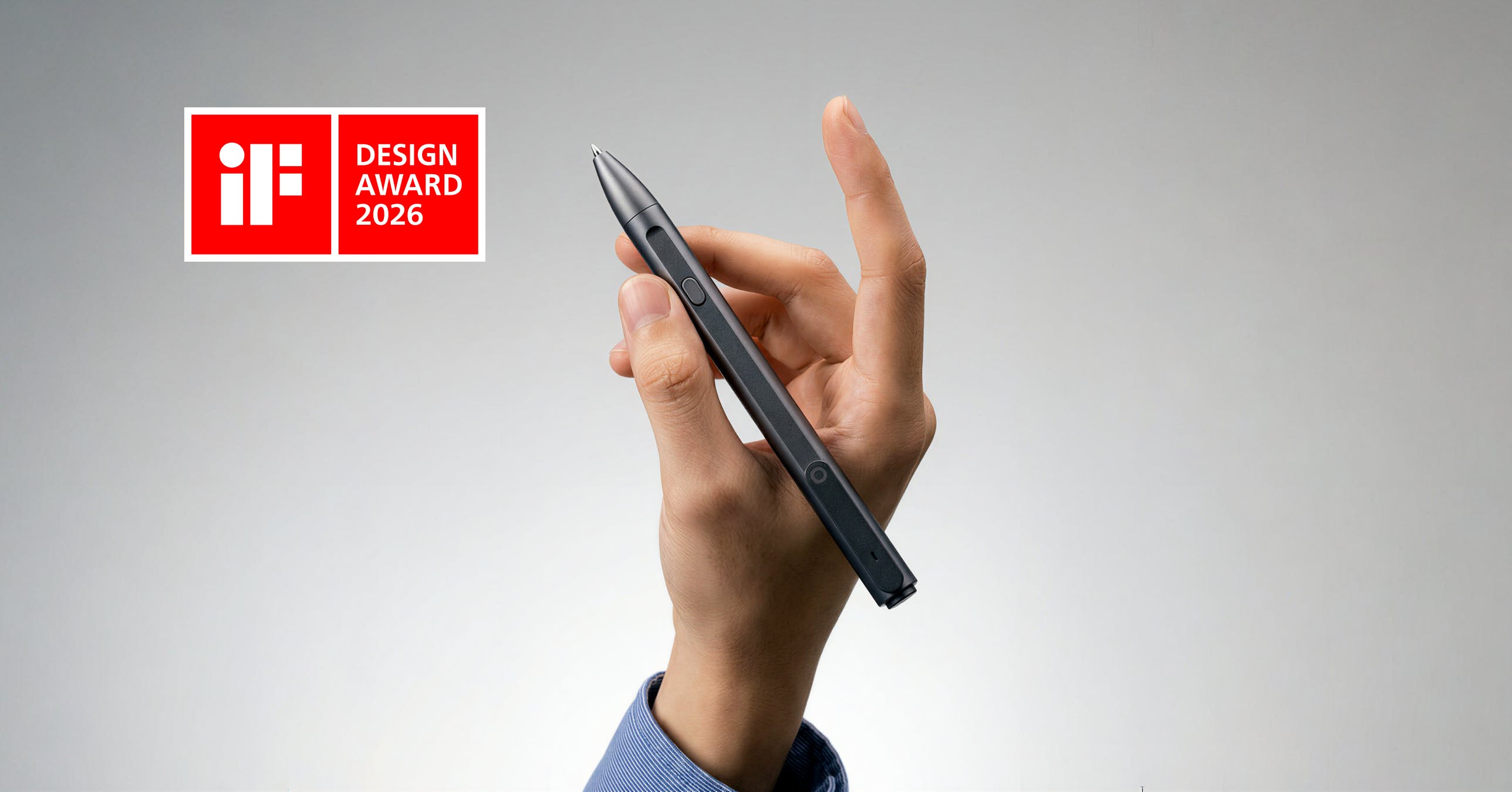
The unique joy of building physical products — Flowtica Scribe wins the 2026 iF Design Award
There s a unique joy in building physical products, and winning recognition from the industrial design community is definitely a very important part of that.
I m really honored that @Flowtica Scribe has received the 2026 iF Design Award it feels like the design world is validating exactly why we do this.


☄️ Week 1 Update: Thank you, and here’s what’s new
First: thank you for an incredible first week
The amazing messages, feedback, and support through Pro upgrades genuinely made this launch feel special.
I'm releasing v1.0.2 today.
This first update is very much shaped by what many of you asked for during this week.