Companies who advertise are starting to realize that leveraging multiple channels, with creative variations across many sizes, helps improve overall campaign performance. Having a matrix of creative variations improves Return-On-Ad-Spend ( ROAS ). However, the downside of producing a matrix of creative is that this burden falls on graphic designers. Using traditional tools, like Photoshop or Canva, can be time-consuming, and somewhat mundane, to take a custom design and produce it 40 times with minor tweaks for each size. If you would automate certain parts of the creative production process, what would save you the most time and heartache? Thank you for your valuable time,
Eric
I believe the key way where AI assistants really become a big help from now on depends on how many tasks you can delegate to them in parallel.
When I get down to development work, I usually have eight windows open, and occasionally when the administrative tasks start pouring in I have thirty-plus running.
You see, AI is very swift and with advances in every AI model, it's possible to entrust an AI with longer tasks. Consequently, if I only had one session open, I'd be the one waiting on the agent. Several at once is different. The agents are the ones waiting for our decision while the work continues and I believe that is how we get far more results done.
Okay, this will be very honest, so hopefully, if they read it, they will not kick me out.
With a client from a fintech, we are trying to come up with ideas on how to present a company (tone of voice, type of posts) in the industry, that is "serious".
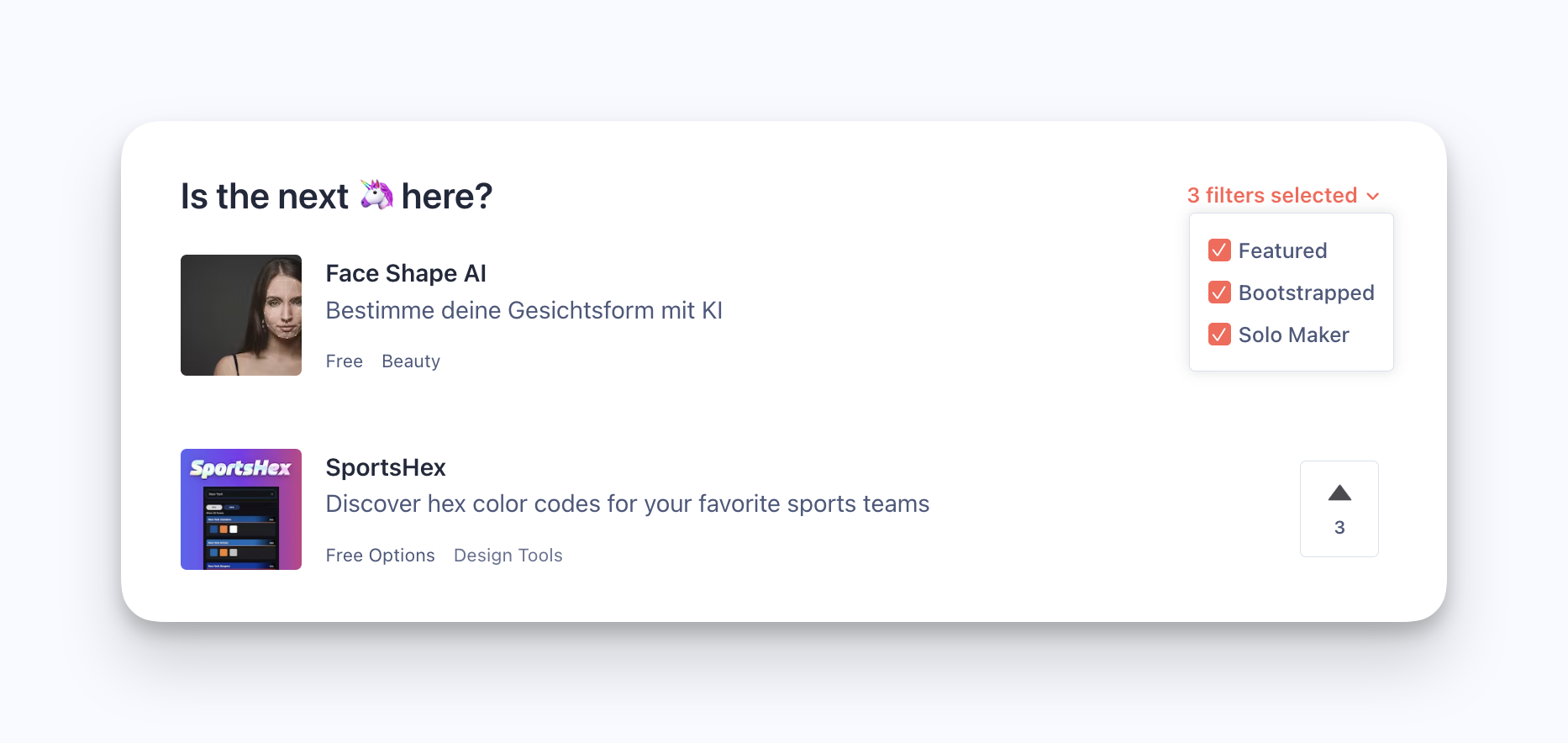
50% of the launches on Product Hunt are by independent and bootstrapping makers, many of whom go on to achieve great things. To better amplify the impact of these wildly talented humans, we ve launched two new homepage filters for solo makers and bootstrapped projects. Try them out!
Most first time founders will go about coding an MVP and designing flashy LPs, launch and see no one coming to use their tool So here is my advice: First how well do you know that need? Have you spoken with at least 10 of them? Have you asked those customers to pay your software based on your clickable prototype (Figma is your friend here)? Asking for money on a prototype helps settle the debate and we go from that's a great idea to well I wouldn't actually pay for that because of X. So talk to customers and get them to buy before coding anything. You would be amazed at how far you can take a customer down the buying process without having anything that works. When you have validated that customers are actually going to pay for your software you know how to convince them and write a proper LP to sell your product. Make your LP pain focus not feature focus and avoid overwhelming users with too much information! At this point, no ads required yet only things that don't scale. You can start reaching out to your customers with personalized soft sales pitch by email, Linkedin and Twitter. There you can identify your one channel where you're going to build your go to market strategy. This will help you better qualify your ICP and refine your sales pitch.
A client asks me to fix a bug on a site that another developer built. Before I open the code I cannot know whether it is a one-line fix or a tangle of old plugins and custom code that takes a day.
A fixed price is simple for the client but risky for me if the code is a mess. Hourly is fair to me but clients worry about the bill growing. A short paid diagnosis first, then a fixed price for the fix, is the middle path I have seen, but not every client accepts paying twice.